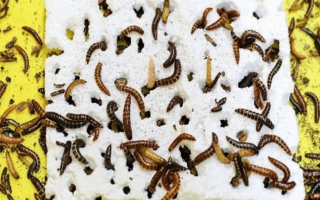
A group of researchers discovered a plastic-eating worm in Kenya, which they believe may become a revolution in the fight against pollution. According to the New York Post, this worm is referred to as the "Kenyan waxworm." After extensive observations, the scientists found that it is capable of easily and quickly breaking down plastic, as it possesses enzymes that can degrade polyester.
Polyester is one of the most widely distributed types of plastic worldwide, commonly used in packaging, electronics, and textiles. This material is difficult to recycle due to its durability and resilience.
Fathia Hamis, a prominent researcher at the International Center for Insect Studies and Ecology, which made this discovery, stated: "By studying these natural organisms that consume plastic, we hope to find ways to use them for faster and more effective plastic waste treatment."
She added: "We can utilize these worms in factories and landfills, for example." Hamis and her team published their findings in the journal Nature: "Fortunately, the worm can provide a more effective and environmentally friendly alternative to traditional plastic recycling methods, which are costly and may increase pollution."
The researchers also pointed out the possibility of studying the enzymes that degrade plastic, which these worms possess, and potentially increasing the intensity of their production and use for plastic waste treatment.